Field notes: two pivots, one lateral, opposite stories
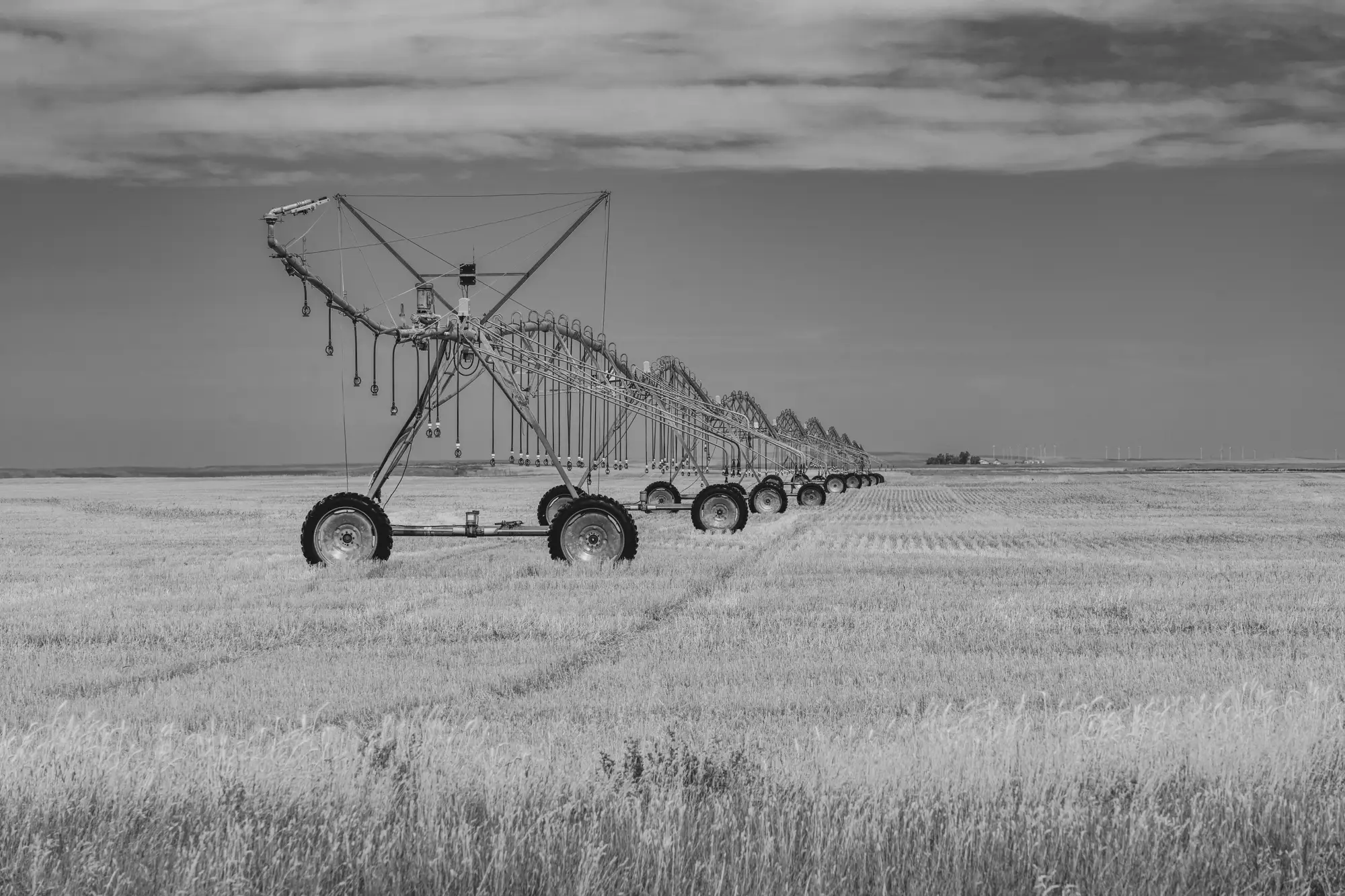
Pivot 11 and pivot 12 share a lateral off the same booster station. Same source, same nominal pressure, same crop, same planting date. If you wanted a clean comparison of how two circuits handle identical inputs, you couldn't design a better pair.
Three weeks ago the weekly pass came back with pivot 11 showing a dry wedge running from about the 280-degree mark out past the end gun, maybe a sixth of the circle short on water. Pivot 12, same week, was carrying an over-irrigated band near the pivot point, the opposite end of the span from where 11 was struggling.
That split is the interesting part. If the lateral itself had a pressure problem, both pivots would show it the same way, probably both light on the outer spans where pressure drop matters most. They didn't. One was short at the far end, the other was heavy near the center. Two different failure modes showing up in the same week on circuits that share a water source.
Pivot 11 turned out to be a worn end-gun nozzle, worn enough that the spray pattern had narrowed and backed off its throw distance. The dry sector traced almost exactly to the arc the end gun covers on that span, which is the kind of thing you only notice if you're looking at the sector against the pivot's own geometry rather than just scanning the field by eye from the truck. Driving the circuit at highway speed, that wedge reads as drought stress or a soil texture change, a guess you'd only correct once you got out and walked the end gun yourself.
Pivot 12 was a regulator sticking on one of the inner towers. Pressure was building where it shouldn't, so the sprinklers closest to the pivot point were putting down more than the design called for while the rest of the span looked normal. That one's easy to miss entirely because it doesn't show up as crop stress the way a dry spot does. Over-irrigation on a healthy stand just looks like a slightly darker patch of a field that's already doing fine, and most people are scanning for trouble, not for too much of a good thing.
What struck me going back through the two reports side by side is how much the lateral they share actually told us by ruling things out. Same source water, same week, same crop response under normal conditions, and the two pivots still produced completely different sector patterns. That rules out the obvious shared-cause explanations, the water right, the booster pump, the weather that week, and points straight at the hardware sitting on each individual pivot. A dry spot and an over-watered band showing up on neighboring circuits in the same pass isn't a coincidence to shrug off. It's two separate maintenance calls, and knowing which pivot needs which fix before you drive out saves a trip where you'd otherwise be guessing at the cause from the cab.
Neither of these would have been obvious from the road. The dry wedge was narrow enough that at highway speed it reads as nothing. The over-irrigated band on 12 doesn't read as a problem at all unless you know what that span is supposed to be putting down relative to the rest of the circle. Irrigation Monitor checks each pivot against its own geometry every week, which is the only way a pattern like this separates itself from normal field variation: you need the expected sector, not just the actual one, to see where the two stopped matching.
Two pivots, one lateral, opposite problems. Worth remembering next time a shared water source makes you assume a shared cause.
If your district runs enough circuits that this kind of split is easy to miss, it might be worth putting your pivots on a weekly sector check too.