Stuck span vs. slow span: telling them apart before you burn a motor
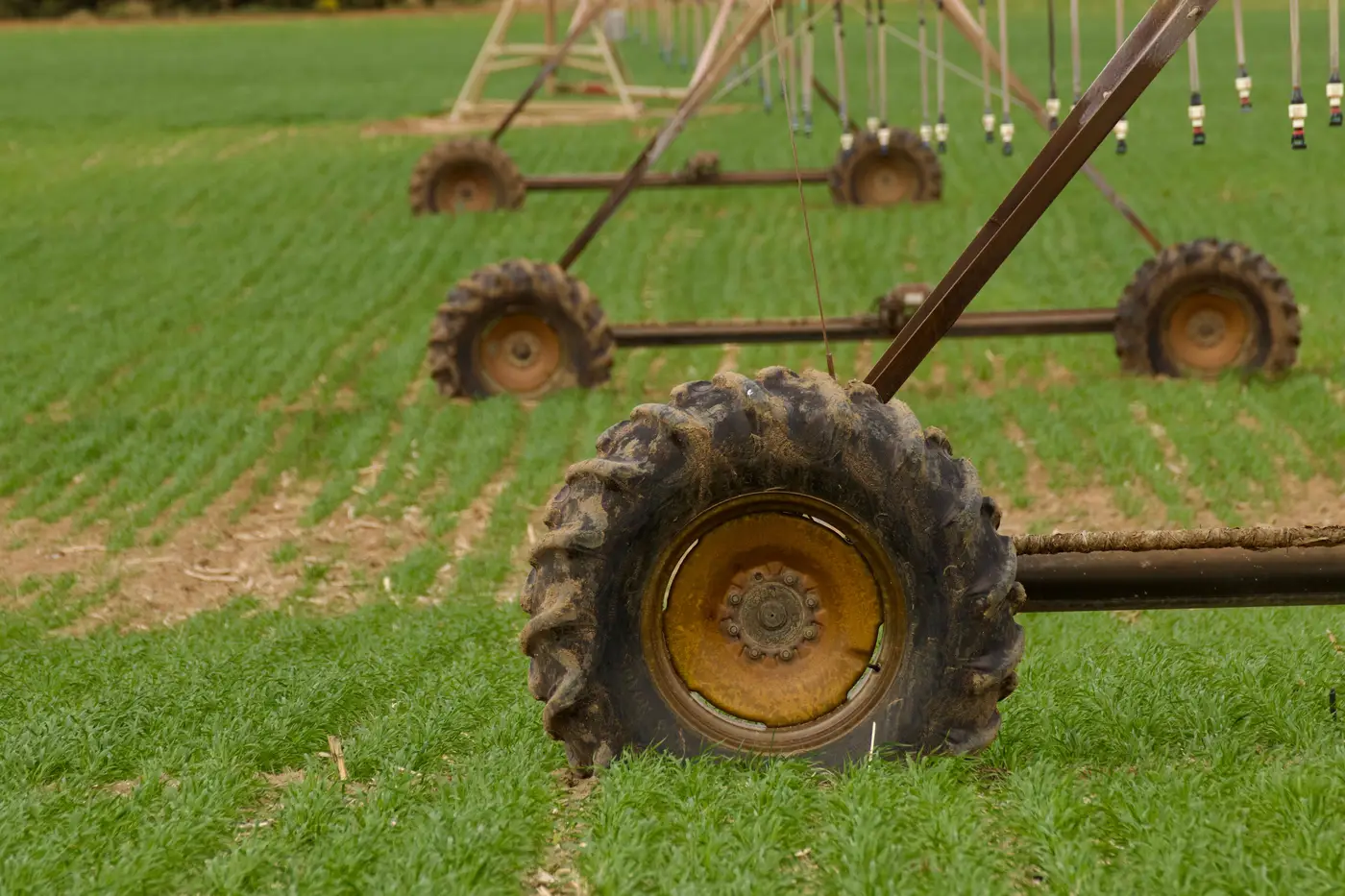
A stuck span and a slow span throw the same alarm half the time, and the guy who answers the call treats them the same way too often. That's how a tower that's limping along for three days turns into a burned-out gearmotor and a sector that's been getting hammered the whole time.
When a span has actually stopped
A stuck span is easy once you're standing next to it. The alignment switch has tripped, the percent timer isn't advancing, or the breaker's popped and nothing on that tower is turning. The drive shaft is dead still. You'll usually get a clean fault code or a system shutdown, because the control panel sees a span that's fallen out of its alignment window and kills power before anything bends.
The causes are usually mechanical and sudden: a sheared pin, a seized gearbox, a wire chewed through at a tower box, a tire that's gone flat and dropped the whole truss angle. Fix the stoppage, reset the switch, and the span moves again. Nothing exotic here, just a repair.
When a span is just falling behind
The slow span is the one that costs you a motor, because nothing shuts it off. The tower is moving, the panel shows no fault, and the circuit keeps running while one span drags a few degrees behind where it should sit relative to the next one in. The alignment switch hasn't tripped yet because it hasn't fallen far enough out of the window, so the system keeps feeding power to a drive train that's fighting an angle it wasn't built to hold for long.
What's usually behind it: a gearmotor on its way out, a drive tire low on air or chewed down past tread, a bearing dragging in the gearbox, a slipping coupler, or a wheel track that's gone soft and is sinking the tire deeper than the others. Any one of those adds resistance, the tower falls a degree or two behind, the alignment switch pulls it back toward the window, and the motor works harder to close that gap on every cycle. Do that for a week and you've shortened the life of that gearmotor by a lot more than a week.
Field checks that separate the two
A few things to check on the ground before you write it up as "normal lag":
- Time the tower against its neighbors over one full revolution instead of eyeballing position once. A tower that's consistently a few minutes behind every cycle is falling behind for a reason, not just a momentary lag.
- Put a hand (carefully) near the gearbox housing after a run. Noticeably hotter than the towers on either side of it means the drive train is working harder than it should.
- Walk the wheel track. A rut that's deeper or wetter than the tracks at the towers next to it tells you that wheel has been sitting in soft ground, fighting for traction.
- Check tire pressure on that tower specifically. Low pressure increases rolling resistance just enough to start the lag without tripping anything.
- Look at the drive coupler and u-joint for play. A coupler that's started to slip transmits less torque than it should, and the tower compensates by running longer each cycle.
None of those checks require you to be standing at that exact tower at the exact time it's struggling, which is the actual problem with catching a slow span early. By the time someone drives the circuit and notices the lag by eye, the gearmotor's already put in days of extra load.
The ground tells the same story before the hardware does. A span that's been lagging behind its geometry for a few cycles lays down a sector that's gotten less water than the ones on either side of it, a thin wedge running along the direction of travel instead of the even band the rest of the circuit shows. That's the kind of pattern a weekly pass that checks every sector against the pivot's own geometry is built to flag, days before anyone's standing at the tower with a wrench.
If you'd rather see that wedge on a report than find it from the cab, Irrigation Monitor runs that check across your whole circuit every week.